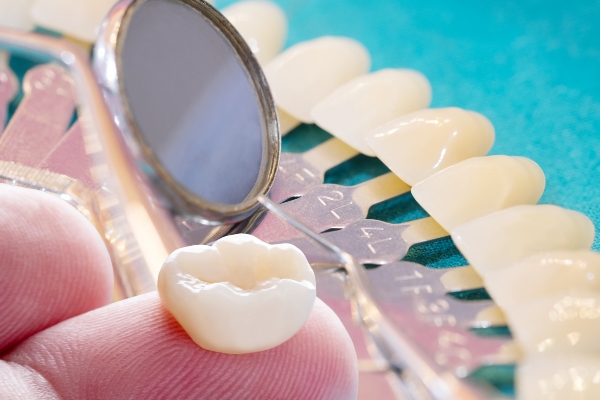
 A dental crown is a common dental restoration for protecting damaged teeth. These devices restore shape, size, and strength and improve their appearance. While dental crowns are durable, they can still sustain damage by biting down on hard objects, facial trauma, or gradual wear and tear. If you find yourself in a situation where your dental crown is damaged, acting as soon as possible is important to prevent further complications.
The signs of a damaged crown
It is important to identify whether a dental crown is damaged and needs to be replaced. Common signs of a damaged crown include:
- Increased pain or sensitivity
- Visible damage (e.g., chips or cracks)
- Loose or unstable
- Swelling
- Sudden change in bite and tooth appearance
- Food getting stuck along the gum line
- Gum recession around the crown
- Dark line on the gum tissue around the crown
What to do if a dental crown is damaged
If an individual notices that their crown is damaged, they should take the time to inspect it. Carefully examine the crown and the surrounding area. It may not require immediate attention if it is a minor chip without pain. However, a general dentist should address any significant damage or pain immediately. Explain the situation in detail and any existing symptoms. We will advise whether they need to come in immediately or if the patient can wait until the available appointment.
If the crown has completely fallen off, try to save it and keep it clean. The patient can attempt to temporarily reattach it with dental cement. This product is typically available at most pharmacies. However, this is only a short-term solution until the patient can see their dentist and get a professional repair or replacement.
In the meantime, the patient can take over-the-counter pain relievers, such as ibuprofen, to help minimize their discomfort. Avoid chewing on the affected side of the mouth while sticking to soft foods to prevent further damage and discomfort.
What to expect during the dental visit
During the dental visit to repair or replace the damaged dental crown, the dentist will thoroughly examine it and the underlying tooth. They may take X-rays to assess the extent of the damage. With this information, the dentist will be able to assess the best course of action: repairing the crown or replacing it.
Repair vs. replacement
Depending on the damage, the dentist may be able to repair the crown. For minor chips or cracks, they can sometimes smooth and reshape the restoration. This ensures the underlying tooth is protected while maintaining the structure and integrity of the restoration.
However, if the damage is too extensive, a replacement might be necessary. This process involves making an impression of the underlying tooth and creating a new crown, which could take a few days or weeks. In these cases, the dentist may provide a temporary crown to protect the tooth while a dental lab crafts the new one.
Preventing future damage
While dental crowns are durable and long-lasting, taking preventive steps can protect them from future damage. Consider using the following tips:
- Avoid hard objects: Steer clear of chewing on hard objects like ice, hard and sticky candies, or pens.
- Good oral hygiene: Maintain good oral hygiene practices, including regular brushing and flossing, to keep dental crowns and natural teeth healthy.
- Mouthguard: If the patient grinds their teeth at night or plays contact sports, the dentist may recommend using a mouthguard to protect their crown and the rest of their teeth.
Protect your crown and your oral health
Have you recently damaged a dental crown? No matter the extent of the damage, the Downtown Atlanta Dentistry is here to help. Call our office to schedule an appointment.
Request an appointment or call Downtown Atlanta Dentistry at 404-999-1407 for an appointment in our Atlanta office.
Related Posts
A dental crown is a common option for restoring a patient’s smile. But what scenarios call for a crown over something like a filling? Understanding how teeth can be repaired — and when they need extra help — can make understanding the importance of good oral hygiene easier.Dentists might install a dental crown for various…
Dental crowns and onlay are two effective smile restorative options. However, sometimes, people use the two terms interchangeably when they have distinct characteristics. Knowing the difference between the two restoratives can help better prepare you for an upcoming consultation.Dental crowns, or caps, are restoratives that completely enclose a vulnerable or damaged tooth. They comprise zirconium,…
Getting a dental crown is a routine procedure. Not only does it require minimal preparation on the patient’s part, but there is also little to no downtime after the crown placement. Still, knowing what to expect when getting a dental crown can calm your nerves for the appointment.General dentists use dental crowns to restore functionality…